
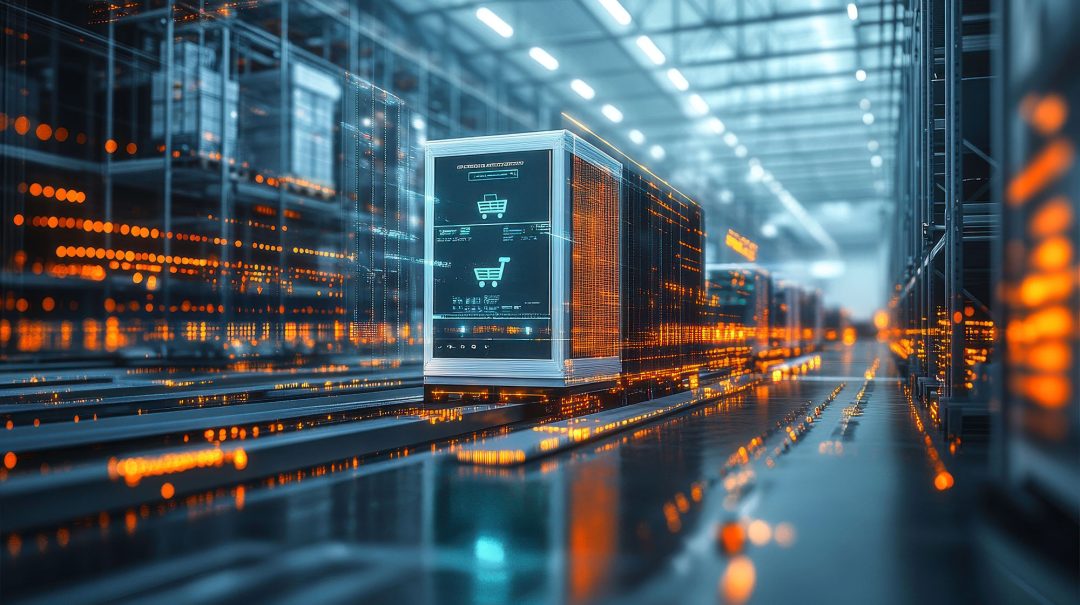
The warehouse industry stands at the precipice of a transformative shift. Recent industry forecasts suggest that by 2027, artificial intelligence will be embedded in 70% of warehouse operations worldwide. For warehouse managers and logistics professionals, this isn’t a distant future, it’s a present-day imperative that demands attention and action.
At ProVision WMS by Ahearn & Soper Inc., we’re witnessing this transformation firsthand as our clients navigate the integration of AI technologies into their daily operations. The question is no longer whether AI will reshape warehousing, but how quickly organizations can adapt to harness its potential.
The Driving Forces Behind AI Adoption
Several converging factors are accelerating AI adoption across the warehousing sector. The explosive growth of e-commerce has created unprecedented demand for faster fulfillment and greater accuracy. Labor shortages continue to challenge operations, while customers expect real-time visibility and same-day delivery options. Traditional warehouse management approaches simply cannot scale to meet these demands.
AI offers solutions that address these challenges simultaneously. Machine learning algorithms can optimize picking routes in real-time, predict inventory needs with remarkable accuracy, and identify operational bottlenecks before they impact productivity. The technology has matured to the point where implementation is increasingly accessible, even for mid-sized operations.
Where AI Is Making the Greatest Impact
The integration of AI in warehouses manifests across multiple operational areas, each delivering measurable value. Intelligent inventory management systems now predict stock requirements by analyzing historical data, seasonal trends, and external factors like weather patterns or market conditions. This predictive capability reduces both stockouts and excess inventory, directly impacting the bottom line.
Robotic systems enhanced with AI vision and decision-making capabilities are transforming pick-and-pack operations. These systems learn from experience, adapting to new products and changing warehouse layouts without extensive reprogramming. The result is flexibility that traditional automation could never achieve.
AI-powered quality control systems use computer vision to inspect products at speeds and accuracy levels that surpass human capabilities. They identify defects, verify correct item selection, and ensure packaging integrity, all in real-time as items move through the facility.
Perhaps most importantly, AI is revolutionizing workforce management. Advanced algorithms analyze productivity patterns, predict staffing needs, and optimize labor allocation. They identify training opportunities by recognizing when workers struggle with specific tasks and can even suggest ergonomic improvements to reduce injury risk.
The ProVision WMS Approach to AI Integration
At Ahearn & Soper Inc., we’ve designed ProVision WMS to serve as the intelligent foundation for AI-enabled warehousing. Our platform captures the granular operational data that AI systems need to learn and improve. Clean, structured data from your WMS becomes the fuel that powers predictive analytics and machine learning models.
The key to successful AI integration lies in starting with solid warehouse management fundamentals. You cannot effectively deploy AI on top of chaotic processes or poor data quality. ProVision WMS establishes the operational discipline and data integrity necessary for AI systems to deliver their promised value.
Our approach focuses on practical, incremental AI adoption. Rather than wholesale transformation that disrupts operations, we help clients identify high-impact use cases where AI can deliver immediate ROI. This might begin with demand forecasting, then expand to intelligent slotting recommendations, and eventually encompass autonomous decision-making in routine operational scenarios.
Overcoming Implementation Challenges
The path to AI-enabled warehousing isn’t without obstacles. Many organizations worry about the complexity and cost of implementation. Others fear that AI will replace human workers rather than augment their capabilities. These concerns are valid, but they shouldn’t prevent forward progress.
The reality is that AI implementation has become significantly more accessible. Cloud-based solutions eliminate the need for massive upfront infrastructure investments. Modern AI tools are increasingly designed for business users, not just data scientists. The learning curve, while still present, is far less steep than it was even two years ago.
Regarding workforce concerns, the evidence shows that AI typically elevates human roles rather than eliminating them. Workers shift from repetitive manual tasks to more strategic activities that leverage human judgment and creativity. Warehouse staff become operators of intelligent systems rather than components of mechanical processes.
Preparing Your Warehouse for the AI Future
Organizations that will thrive in this AI-enabled future are taking specific steps today. First, they’re auditing their data infrastructure. AI requires quality data, which means implementing systems that capture accurate, comprehensive operational information. ProVision WMS provides this foundation, ensuring that every transaction, movement, and decision is properly recorded and accessible.
Second, successful organizations are building AI literacy across their teams. This doesn’t mean everyone needs to become a data scientist, but warehouse managers and operators should understand AI capabilities and limitations. They need to know which problems AI can solve and which still require human expertise.
Third, forward-thinking companies are establishing pilot programs. They select specific processes or areas where AI can demonstrate value quickly, learn from these implementations, and then scale successful approaches across the broader operation. This test-and-learn methodology reduces risk while building organizational confidence in AI technologies.
The Competitive Imperative
The statistic that 70% of warehouses will embed AI by 2027 represents more than a prediction, it describes a new competitive baseline. Organizations that delay AI adoption risk falling behind competitors who leverage these technologies to operate faster, more accurately, and more efficiently.
The warehouses that will dominate their markets in the coming years are those that view AI not as a futuristic novelty but as a practical tool for solving today’s operational challenges. They’re taking action now to build the data infrastructure, develop the organizational capabilities, and implement the technologies that will define modern warehousing.
Moving Forward with ProVision WMS
At Ahearn & Soper Inc., we’re committed to helping our clients navigate this transformation. ProVision WMS is evolving alongside AI technologies, incorporating intelligent features while maintaining the reliability and usability that warehouse operations demand.
Whether you’re just beginning to explore AI possibilities or you’re ready to implement specific solutions, ProVision WMS provides the platform you need. Our team understands both warehouse operations and emerging technologies, positioning us to guide your AI journey from initial assessment through full-scale deployment.
The AI revolution in warehousing is underway. The only question that remains is whether your operation will lead this transformation or scramble to catch up. With the right warehouse management system and a thoughtful approach to AI integration, you can position your organization at the forefront of this industry evolution.
Ready to explore how AI can transform your warehouse operations? Contact the ProVision WMS team at Ahearn & Soper Inc. to discuss your specific needs and discover the path forward.