
For decades, warehouse automation has conquered the predictable: conveyors move boxes, sorters route packages, and automated storage systems retrieve pallets with mechanical precision. Yet one challenge has remained stubbornly resistant to automation, the humble act of picking individual items from a bin, shelf, or mixed pallet. This task, performed millions of times daily by human hands, represents what many considered the “last mile” of warehouse automation.
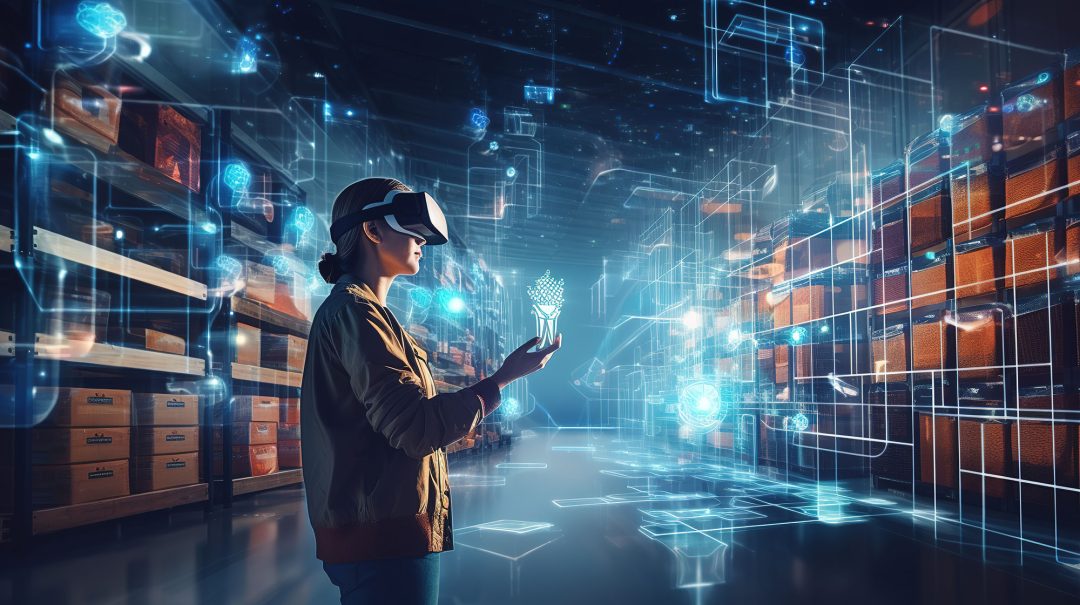
That’s changing now. Computer vision powered by artificial intelligence is finally cracking the code on piece picking, transforming what was once automation’s Achilles heel into its next frontier.
The Problem That Stumped Traditional Automation
Traditional warehouse robots excel in structured environments. Give them identical boxes on a conveyor belt or uniform pallets in predictable positions, and they’ll work tirelessly with near-perfect accuracy. But ask them to pick a soft bag of dog food nestled next to a rigid plastic container and a glass jar, all different shapes, materials, and fragility levels, and older systems falter.
The challenge isn’t just variety. It’s the sheer unpredictability of real-world warehousing:
Irregular shapes and materials: A plush toy compresses differently than a metal tool. A bag of chips requires gentler handling than a boxed appliance. Traditional vision systems, relying on pre-programmed templates, couldn’t adapt to this diversity.
Mixed SKU environments: E-commerce has made mixed-SKU picking the norm. A single order might require grabbing a book, a bottle of vitamins, and a phone case from the same bin. Earlier robots needed items separated and oriented precisely—a requirement that defeated the purpose of flexible storage.
Unstructured bin picking: Items tumble into bins at random angles, stacked haphazardly, sometimes partially obscured. Traditional machine vision could identify objects in controlled positions but struggled when that shirt was wedged beneath two pairs of shoes at an odd angle.
Dynamic inventory: SKUs change constantly. New products arrive weekly. Teaching traditional systems to recognize each new item required extensive programming—a bottleneck that couldn’t keep pace with modern commerce.
These aren’t edge cases. They’re the daily reality of warehouses serving retail, e-commerce, third-party logistics, and manufacturing operations. For years, the answer was simple: humans remained unbeatable at picking.
Enter AI-Powered Computer Vision
The breakthrough came not from better mechanical grippers (though those helped) but from fundamentally rethinking how robots “see” and understand their environment. Modern AI vision systems don’t rely on rigid templates. Instead, they learn the way humans do, through exposure to vast amounts of visual data and the ability to generalize from that experience.
Deep learning neural networks can now:
Recognize objects never seen before: Rather than matching against a fixed database, AI systems understand general characteristics, “this is a soft package,” “this has a graspable edge,” “this is fragile.” They can infer handling strategies for novel items based on learned principles.
Understand 3D space in cluttered environments: Advanced vision systems use multiple cameras, depth sensors, and AI algorithms to build real-time 3D models of bin contents. They can identify where one item ends and another begins, even when objects overlap, and calculate optimal grasp points on partially obscured items.
Adapt grip strategies in real-time: AI doesn’t just see; it predicts. By analyzing material properties, weight distribution, and object geometry, modern systems select appropriate grippers and adjust pressure dynamically. A bag of rice gets handled differently than a hardcover book, automatically.
Learn continuously: Each pick provides data. The system learns which approaches succeed and which fail, refining its strategies over time. This self-improvement loop means performance increases with use.
Real-World Impact: From Lab to Loading Dock
The technology has moved beyond research labs into operational warehouses, and the results are reshaping what’s possible:
Mixed-case depalletizing: Retailers receiving pallets loaded with different products can now automate breakdown. AI vision identifies each item on the pallet, regardless of orientation or stacking pattern, and orchestrates robotic picking that once required human judgment.
High-SKU piece picking: Operations handling thousands of SKUs, common in e-commerce fulfillment, are deploying vision-guided robots that learn new products automatically. When a new SKU arrives, the system observes it during putaway and adds it to its knowledge base without manual programming.
Returns processing: Perhaps no task is more variable than processing returns. Items arrive in every conceivable condition, packaging, and orientation. AI vision systems are now sorting returned goods, identifying damage, and routing items for restocking or disposal with minimal human intervention.
Kitting and assembly: Manufacturing operations are using vision-guided picking to assemble kits containing diverse components. The system verifies that each picked item matches the order, catching errors that could cascade down production lines.
The Technology Stack Behind the Revolution
What makes this possible isn’t one technology but the convergence of several:
3D vision sensors: Time-of-flight cameras, structured light sensors, and stereo vision systems provide depth information that flat cameras cannot. This allows robots to understand not just what an object is, but where it sits in three-dimensional space.
Edge AI processing: Modern vision systems process data locally, making decisions in milliseconds. This speed is essential; a robot can’t wait for cloud processing when it needs to adjust its grip mid-motion.
Synthetic training data: AI models are trained on millions of images, including computer-generated synthetic scenarios. This allows systems to learn from situations they haven’t physically encountered, dramatically accelerating development and expanding capabilities.
Multi-modal sensing: Vision is augmented with force feedback, tactile sensors, and even sound analysis. If an item slips during picking, sensors detect it instantly, allowing correction before the item falls.
End-effector innovation: Adaptive grippers with soft robotics, suction arrays that conform to irregular shapes, and multi-fingered hands give vision systems more options for executing successful picks.
Integration with WMS: The Intelligence Multiplier
Computer vision robots don’t work in isolation. Their true power emerges when integrated with warehouse management systems that provide context and orchestration.
A modern WMS like ProVision tells the vision system not just to pick an item but provides crucial context is this item fragile, what’s its destination, how urgent is the order, and what other items are being picked for the same shipment. This information allows the AI to prioritize picks, optimize batching, and make smarter decisions about handling.
The integration flows both ways. Vision systems feed data back to the WMS: actual item dimensions (often more accurate than master data), observed handling characteristics, and pick success rates by SKU. This creates a feedback loop that improves both robotic performance and overall warehouse operations.
The WMS also serves as the command center for hybrid operations where robots and humans work alongside each other. It dynamically assigns tasks based on each agent’s strengths, routing irregular or delicate items to human pickers while directing high-volume, ergonomically challenging picks to robots.
What This Means for Warehouse Operations
The practical implications extend beyond simply replacing human pickers:
Flexibility at scale: Operations can now automate picking without sacrificing the flexibility to handle diverse, changing inventory. This was previously an either/or choice; now it’s and/both.
Labor optimization, not replacement: Rather than eliminating workers, smart operations are redeploying them to tasks requiring human judgment while robots handle repetitive, ergonomically stressful picking. This addresses labor shortages while improving working conditions.
24/7 consistency: Robots don’t fatigue. Vision-guided systems maintain accuracy through third shift and holiday peaks, smoothing the productivity curves that plague human-dependent operations.
Faster SKU onboarding: New products can be integrated into automated picking with minimal setup. In some cases, simply introducing the item to the system during receiving is sufficient, no programming required.
Data-driven improvement: Every pick generates data about handling efficiency, item characteristics, and process performance. This visibility enables continuous operational refinement impossible with manual processes.
Challenges That Remain
The technology is transformative but not yet universal. Certain challenges persist:
Cost of entry: Advanced vision-guided robotic systems require significant capital investment. The ROI calculation works for high-volume operations but may not pencil for smaller warehouses.
Handling extremes: Very large, very small, extremely heavy, or highly deformable items still challenge current systems. The technology is expanding its range but hasn’t conquered every edge case.
System integration complexity: Deploying vision robotics requires careful coordination with existing WMS, material handling equipment, and facility layouts. Integration complexity can extend deployment timelines.
Change management: Introducing robotics changes workflows, staffing models, and operational procedures. Technical success requires accompanying organizational adaptation.
The Road Ahead
The trajectory is clear: computer vision will become standard in warehouse picking operations, much as barcode scanning did decades ago. We’re likely to see:
Modular, scalable deployments: Rather than all-or-nothing automation, operations will add vision-guided picking in phases, targeting specific processes or product categories where ROI is strongest.
Collaborative robots everywhere: The line between “automated” and “manual” picking will blur as cobots (collaborative robots) with vision capabilities work directly alongside humans, handling individual tasks within human-managed workflows.
Predictive picking intelligence: AI won’t just react to what it sees; it will predict optimal picking strategies based on historical data, anticipated order patterns, and real-time warehouse conditions.
Democratized access: As technology matures and suppliers proliferate, costs will decline. Vision-guided picking that today serves only large operations will become accessible to mid-sized warehouses.
Conclusion: Vision as Warehouse Intelligence
The AI picking revolution represents more than automating a task. It’s about bringing true intelligence, the ability to see, understand, adapt, and learn, into warehouse operations. Computer vision transforms robots from rigid machines following scripts into flexible systems that handle the messy, unpredictable reality of modern fulfillment.
For warehouse operators, the question isn’t whether to explore vision-guided picking but how to prepare for its integration. That means ensuring your WMS can support the data exchange these systems require, evaluating processes to identify automation opportunities, and developing strategies to blend robotic and human capabilities.
The hardest problem in warehouse automation is being solved. The operations that thrive in the coming decade will be those that recognize this shift not as a distant future but as a present opportunity, and act accordingly.
At Ahearn & Soper, our ProVision WMS is built for the intelligent warehouse of tomorrow, today. With native support for robotic integration, real-time task optimization, and the data infrastructure that AI systems need to excel, ProVision helps you bridge manual operations and automated futures. Ready to explore how computer vision and advanced WMS capabilities can transform your warehouse? Let’s talk.