
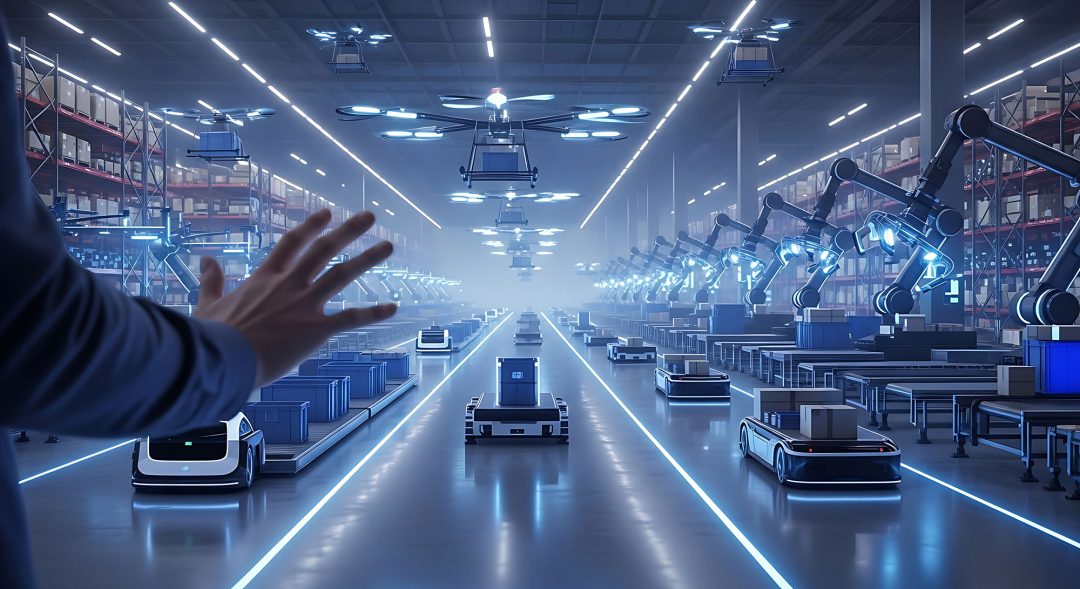
The modern warehouse is evolving rapidly. Automation, artificial intelligence, and interconnected systems are transforming how we store, manage, and move goods. While these technological advances promise unprecedented efficiency and accuracy, they also introduce new vulnerabilities that warehouse operators must address proactively.
At ProVision WMS by Ahearn & Soper Inc., we believe that understanding these vulnerabilities is the first step toward building resilient, secure warehouse operations for the future. Let’s explore the key areas of concern and how forward-thinking warehouse managers are addressing them.
Cybersecurity: The Digital Achilles’ Heel
As warehouses become increasingly connected through Internet of Things (IoT) devices, cloud-based warehouse management systems, and automated equipment, they become attractive targets for cybercriminals. A successful cyberattack can halt operations entirely, compromise sensitive customer data, or manipulate inventory records.
The integration of multiple systems, from WMS platforms to robotics controllers and transportation management systems, creates numerous potential entry points for malicious actors. Each connected device, from handheld scanners to autonomous mobile robots, represents a potential vulnerability if not properly secured.
Key risks include:
- · Ransomware attacks that can freeze warehouse operations
- · Data breaches exposing customer information and trade secrets
- · Supply chain attacks through compromised software updates
- · Unauthorized access to control systems managing automated equipment
Mitigation requires a multi-layered approach: regular security audits, employee training on phishing and social engineering, network segmentation to isolate critical systems, and robust authentication protocols for all system access.
Over-Reliance on Automation
While automation delivers significant benefits, complete dependence on automated systems without adequate backup procedures creates operational fragility. When automated storage and retrieval systems (AS/RS), conveyor networks, or robotic picking systems fail, warehouses without contingency plans can face complete standstills.
The complexity of modern automation also means that troubleshooting and repairs often require specialized technicians who may not be immediately available. A single point of failure in a highly integrated system can cascade throughout the entire operation.
Smart warehouse operators are maintaining hybrid approaches that allow for manual intervention when needed, cross-training staff on both automated and traditional methods and establishing clear escalation procedures for system failures.
Workforce Challenges and Skills Gaps
The warehouse of the future requires a fundamentally different workforce than traditional operations. As technology advances, the gap between available workers and those with necessary technical skills continues to widen. Finding employees who can manage sophisticated WMS platforms, troubleshoot automated equipment, and interpret data analytics is increasingly challenging.
This skills gap creates vulnerabilities in several ways. Operations become dependent on a small number of technical experts, creating risk when these individuals are unavailable. Training new employees takes longer and costs more. The inability to fully utilize advanced systems due to lack of expertise means companies fail to realize their technology investments.
Addressing this vulnerability requires investment in comprehensive training programs, partnerships with educational institutions, clear career pathways that retain skilled workers, and user-friendly systems that reduce the technical burden on warehouse staff.
Supply Chain Disruption Sensitivity
Modern warehouses operate with unprecedented visibility and coordination across global supply chains. However, this interconnectedness also means that disruptions anywhere in the network can rapidly impact warehouse operations. The lean, just-in-time approaches that minimize inventory costs also reduce buffer capacity when disruptions occur.
Weather events, geopolitical tensions, transportation breakdowns, or supplier failures can quickly leave warehouses unable to fulfill orders or forced to hold excess inventory with nowhere to send it. The warehouse of the future must balance efficiency with resilience.
Strategies to address this vulnerability include diversifying supplier networks, implementing predictive analytics to anticipate disruptions, maintaining strategic safety stock for critical items, and developing flexible warehouse layouts that can adapt to changing product mixes.
Data Integrity and System Integration Issues
As warehouses integrate multiple software platforms, WMS, ERP, transportation management, order management, and more, data synchronization becomes critical. Discrepancies between systems can lead to inventory inaccuracies, order fulfillment errors, and poor decision-making based on faulty information.
Legacy systems that don’t communicate effectively with newer technologies create data silos and manual workarounds that introduce errors. Real-time data requirements mean that even brief synchronization failures can have significant operational impacts.
Protecting data integrity requires robust API connections between systems, regular data validation and reconciliation processes, clear data governance policies, and contingency procedures when system integration fails.
Energy Dependency and Sustainability Pressures
The automated warehouse of the future consumes significantly more energy than traditional facilities. This creates vulnerability to power disruptions and exposes operations to energy cost volatility. Additionally, growing regulatory requirements and customer expectations around sustainability create pressure to reduce environmental impact while maintaining operational efficiency.
Battery-powered equipment requires careful management of charging cycles. Climate control for temperature-sensitive goods consumes substantial energy. The carbon footprint of operations increasingly affects brand reputation and regulatory compliance.
Forward-thinking warehouses are investing in backup power systems, exploring renewable energy sources, implementing energy management systems that optimize consumption, and selecting equipment with better energy efficiency profiles.
Physical Security in an Automated Environment
While automation can enhance certain aspects of physical security through constant monitoring and restricted access zones, it also creates new vulnerabilities. Fewer human eyes on the floor may mean delayed detection of physical breaches, equipment tampering, or safety hazards. The value of sophisticated automated equipment makes warehouses attractive targets for theft.
Drone technology and other emerging threats require new security approaches. The same connectivity that enables operational efficiency can be exploited to disable security systems or manipulate access controls.
Comprehensive physical security for modern warehouses includes advanced surveillance with AI-powered anomaly detection, layered access control systems with multi-factor authentication, regular security audits that address both physical and cyber aspects, and coordination between IT security and physical security teams.
Building Resilience for the Future
Understanding these vulnerabilities is only the beginning. The most successful warehouses of the future will be those that take a holistic approach to risk management, balancing the pursuit of efficiency with investments in resilience, security, and workforce development.
At ProVision WMS by Ahearn & Soper Inc., we design our solutions with these vulnerabilities in mind, helping warehouse operators build systems that are not only efficient and accurate but also secure, resilient, and adaptable to whatever challenges the future holds.
The warehouse of the future will face complex, interconnected vulnerabilities. But with proper planning, investment, and the right technology partners, these challenges can be transformed into competitive advantages that distinguish industry leaders from those left behind.
Ready to future-proof your warehouse operations? Contact ProVision WMS by Ahearn & Soper Inc. to learn how our solutions address these critical vulnerabilities while optimizing your warehouse performance.